
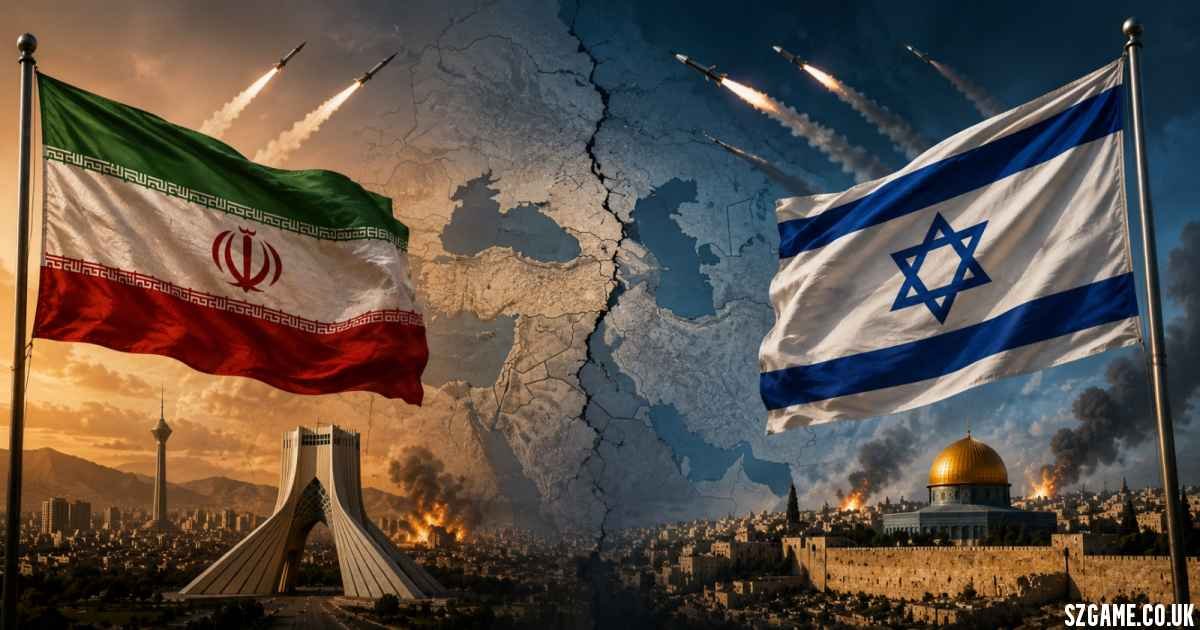

The iran-israël conflict remains one of the world’s most closely watched geopolitical rivalries in 2026. What began as a political and ideological dispute has evolved into a complex confrontation involving direct missile attacks, cyber warfare, proxy militias, intelligence operations, and concerns over Iran’s nuclear program. The conflict no longer affects only the Middle East—it influences global energy markets, international diplomacy, military alliances, and regional security.
If you’re searching for why Iran and Israel are enemies, what is happening in 2026, and what the future may hold, this updated guide explains the history, current developments, military balance, and possible future scenarios in clear and factual terms.
The Origins of the Iran-Israel Conflict: Why Are Iran and Israel Enemies?
The hostility between Iran and Israel was not always part of Middle Eastern politics. Before the 1979 Islamic Revolution, Iran, under Shah Mohammad Reza Pahlavi, maintained diplomatic and economic relations with Israel. The two countries cooperated in areas including trade, intelligence, and regional security.
Everything changed after the revolution brought Ayatollah Ruhollah Khomeini and the Islamic Republic to power. The new government rejected Israel’s legitimacy, referring to it as the “Zionist regime” and positioning itself as a supporter of the Palestinian cause. Since then, relations have steadily deteriorated into one of the region’s longest-running rivalries.
Today, four major factors continue to drive the conflict:
- Ideological and Religious Differences: Iran presents itself as the leader of the “Axis of Resistance” against Israel, while Israel views Iran’s leadership and rhetoric as an existential security threat.
- The Palestinian Issue: Iran provides political, financial, and military support to organizations including Hamas and Palestinian Islamic Jihad, groups that have engaged in armed conflict with Israel.
- Iran’s Nuclear Program: Israel believes Iran could eventually develop nuclear weapons, while Iran maintains its nuclear activities are intended for civilian energy purposes.
- Regional Power Competition: Both nations seek strategic influence across the Middle East. Iran supports allied groups such as Hezbollah in Lebanon, the Houthis in Yemen, and militias in Syria and Iraq, while Israel works to counter this expanding regional network.
These overlapping political, military, and ideological issues have transformed a diplomatic dispute into a decades-long strategic confrontation.
Timeline: From Shadow War to Direct Confrontation (2023–2026)
For many years, Iran and Israel avoided direct military conflict, instead engaging in what analysts called a “shadow war.” This included covert operations, cyberattacks, targeted assassinations, and military strikes carried out through proxy forces.
Before 2023: The Shadow War
The rivalry largely consisted of:
- Israeli airstrikes targeting Iranian military positions in Syria.
- Alleged assassinations of Iranian nuclear scientists.
- Cyberattacks targeting infrastructure in both countries.
- Maritime attacks involving commercial ships linked to Iran and Israel.
October 2023: A Major Turning Point
Following the October 7, 2023 Hamas attack on Israel, regional tensions escalated significantly. Iran’s support for Hamas and Hezbollah increased international scrutiny, while Hezbollah intensified rocket attacks from southern Lebanon, raising fears of a wider regional conflict.
April 2024: First Direct Military Exchange
A significant escalation occurred after Israel struck Iran’s diplomatic compound in Damascus, killing senior Islamic Revolutionary Guard Corps (IRGC) commanders. Iran responded with Operation True Promise, launching more than 300 drones and missiles toward Israel—the first direct attack from Iranian territory. Most incoming projectiles were intercepted by Israeli air defenses with assistance from the United States, the United Kingdom, Jordan, and other regional partners.
2025–2026: Continuing Escalation
Throughout 2025, reports indicated continued targeted operations involving missile facilities, military infrastructure, and proxy groups. Iran expanded its missile capabilities while continuing uranium enrichment. In 2026, the relationship remains characterized by high tensions, deterrence, and periodic exchanges, with both governments signaling readiness to respond forcefully while seeking to avoid an uncontrolled regional war.
Military Power Comparison: Iran vs. Israel in 2026
Although both countries possess formidable military capabilities, they rely on very different strategies.
Israel’s Military Advantages
Israel maintains one of the world’s most technologically advanced armed forces. Key strengths include:
- Iron Dome, David’s Sling, and Arrow 3 missile defense systems.
- Advanced F-35I Adir stealth fighter aircraft.
- Sophisticated intelligence capabilities through organizations such as Mossad and Unit 8200.
- Strong strategic partnership and military support from the United States.
- A long-standing policy of nuclear ambiguity, with widespread international assessments suggesting Israel possesses nuclear weapons, though it neither confirms nor denies this.
Iran’s Military Advantages
Iran emphasizes asymmetric warfare and strategic depth rather than conventional air superiority. Major strengths include:
- One of the largest ballistic missile and drone arsenals in the Middle East.
- Thousands of ballistic missiles and increasingly advanced drone technology.
- Regional influence through allied groups including Hezbollah, Iraqi militias, Syrian partners, and the Houthis.
- Strategic control near the Strait of Hormuz, a vital shipping route through which approximately 20% of global oil supplies pass.
In practical terms, Israel possesses superior technology and air power, while Iran relies on missile volume, regional alliances, and asymmetric military tactics. Any large-scale conflict would likely have severe humanitarian and economic consequences.
The Nuclear Issue: The Most Sensitive Part of the Conflict
The Iranian nuclear program remains the most critical source of tension between the two countries.
According to reports from the International Atomic Energy Agency (IAEA), Iran has enriched uranium to approximately 60% purity, significantly higher than levels typically required for civilian nuclear energy. Weapons-grade uranium generally requires enrichment to around 90%, leading to ongoing international concern about Iran’s technical capabilities.
Iran maintains that its nuclear program is peaceful and intended for energy production and scientific research. However, concerns persist regarding transparency, inspections, and underground facilities such as Fordow and Natanz.
Israel has repeatedly stated that it considers a nuclear-armed Iran an unacceptable security threat. Israeli leaders, including Prime Minister Benjamin Netanyahu, have consistently indicated that Israel reserves the right to act independently if diplomacy fails.
International efforts by the United States, European nations, and regional mediators continue to focus on preventing further escalation through diplomacy, sanctions, and renewed discussions over a possible successor to the Joint Comprehensive Plan of Action (JCPOA).
What Could Happen Next? Three Possible Scenarios for 2026–2027
Security experts generally discuss three broad scenarios for the future of the Iran-Israel conflict.
1. Continued Containment and Shadow Conflict (Most Likely)
Most analysts believe both sides will continue avoiding full-scale war while engaging in limited military operations, cyberattacks, intelligence activities, and proxy confrontations. This scenario maintains regional instability but reduces the immediate risk of direct conventional warfare.
2. Diplomatic De-escalation
A less likely but possible outcome involves renewed diplomatic engagement through mediators such as Oman, Qatar, or other international partners. A revised nuclear agreement could reduce tensions if both sides accept compromises involving sanctions relief and nuclear restrictions.
3. Full-Scale Regional War
The most dangerous scenario would result from a major military miscalculation—such as a large-scale missile strike, an attack on nuclear facilities, or a broader regional confrontation involving Hezbollah, Gulf states, and the United States. Such a conflict could disrupt global energy markets, international trade, and regional stability while creating significant humanitarian challenges.
Conclusion
The Iran-Israel conflict in 2026 is no longer confined to covert intelligence operations or proxy battles. It has evolved into a high-stakes geopolitical rivalry involving missile exchanges, cyber warfare, regional alliances, and nuclear concerns that affect not only the Middle East but also the wider international community.
Understanding the conflict requires looking beyond individual headlines to its deeper historical, ideological, and strategic roots. While diplomacy remains possible, both countries continue to prioritize national security and deterrence, making the situation highly unpredictable. As long as disputes over regional influence, proxy groups, and Iran’s nuclear ambitions remain unresolved, the Iran-Israel rivalry will continue to shape global security, energy markets, and international politics throughout 2026 and beyond.